CRIMEAN TURKS ASSOCIATION OF AMERICA AND MOSQUE
(November 14, 1961, Brooklyn, New York, USA)
Migration, also known as the Hegira, is one of the most significant events that has left a profound mark on the history of individuals, communities, and nations, often seen as a turning point. Throughout history, these movements have led to profound changes, occurring for a variety of reasons, including economic opportunities, wars, natural disasters, or political pressures. They have fundamentally altered people's lives while also shaping the religious, cultural, social, and economic structures of societies.
Ottoman lands, in particular, served as a haven for diverse communities for centuries, and forced migrations led to major social and demographic changes. Within this framework, migrations from Crimea to Ottoman lands morphed into a massive mass movement with the annexation of the Crimean Khanate by Russia in 1783. Following the annexation of Crimea by Russia, oppression intensified during the Soviet era, and the Crimean Turks were exiled entirely in 1944. Crimean Turks who migrated to Türkiye integrated into Türkiye, preserving their identity and cultural ties, while also maintaining cultural and political ties with Crimea.
Another adventure began for Crimean Turks in the mid-20th century, this time with an involuntary migration to the United States. They immigrated to the country in the 1960s and 1970s, taking advantage of opportunities provided by the United States. From that time on, Crimean Turks began to live in large numbers in the New York and New Jersey areas.
Initially gathering in the home of a different family each week, Crimean Turks continued to unite in a spirit of solidarity despite all the hardships. Association meetings, folklore group activities, and religious and cultural events held in the warm atmosphere of these homes became cornerstones of preserving their identity, even while far from their homeland.
However, for these efforts to translate into a permanent institutional structure and gain official status, the requirement of citizenship to apply to American authorities posed a significant obstacle to the association's process of formalization. Despite this, the group, acting with determination, managed to find members who met the necessary requirements and complete the official process. Finally, after much effort, a historic step was taken: the association was officially established in Brooklyn on November 14, 1961, under the name "American Association of Crimean Turks.".
Since then, this association, established after much effort, has become the voice and solidarity center of Crimean Turks in America, and as one of the oldest Turkish associations in New York State, it has played an important role in preserving national and spiritual values and ensuring unity.
This significant achievement represented not only the founding of the association, but also a turning point that cemented the Crimean Turks' presence in America. The founding members who pioneered the arduous journey from the outset were İbrahim Dülber, Mehmet Sevdiyar, Refat İlkson, Ethem Çelebi, Şevket Dolan, Feride Yakup, and Refat İbrahim, who envisioned the association and brought their friends from Türkiye. Their sacrifices were among the most important cornerstones in strengthening the Crimean Turks' presence in America, laying the foundation for unity and solidarity within the community.
İbrahim İsmail, İbrahim Talat, Feride Yakup, Saniye Balaban, and İbrahim Refat, who officially established the association, along with the aforementioned founding members who made extraordinary sacrifices, not only established an association but also faced significant challenges in fulfilling their religious obligations. Without a place to perform Eid prayers and a cleric to lead them, they struggled to fulfill their religious obligations.
The community's need for a mosque to perform Friday and Eid prayers, a cleric to lead the five daily prayers, bury and enshrine the dead, and recite the Mawlid and prayers became increasingly evident. Due to the lack of a suitable venue to meet this need, despite all the constraints, Friday and Eid prayers, Mawlid prayers, and prayers began to be performed in the basements of buildings. Although simple and modest, these spaces became not only places of worship for the community but also places where the spirit of brotherhood flourished and spiritual bonds were strengthened. The prayers echoing in those narrow, dimly lit basements became a silent yet profound expression of a nation's determination to keep its faith and identity alive.
As a testament to this resolve, the decisions made by the association at that time are now considered historical documents. A decision included in the association's minutes book dated May 2, 1971, contains the following striking statements: “…It was decided that a Mawlid would be recited for the Prophet’s birthday on May 8, 1971, at Enver Borluca’s building at 665 Ocean Parkway, Brooklyn…” These lines beautifully reflect the community's will to protect their spiritual values and their determination to keep their faith alive even though they are far from their homeland.
Hacı Emin Çağarlı, who had earned the community's love and respect, was chosen as the community's first teacher. The late Hacı Emin Hoca served as a hope, a guide, and a refuge for the Crimean Turks in these distant lands. He shared both the community's joys and sorrows, and always led the community at weddings, funerals, engagements, and circumcision ceremonies.
Following him, Ali Özdenoğlu and Abdurrahman Avcıoğlu served as the spiritual guides of the community for many years, serving with great dedication to keep the national and spiritual values of the Crimean Turks alive. These pioneering scholars left a deep mark on the community's memory, dedicating their lives to faith and service. As a twist of fate, these lands of migration also became their final destination, and their cherished memories were entrusted to the heart of this new homeland to which they had migrated. May God have mercy on them all.
Furthermore, in the early 1980s, the society took a historic step: through the New York Consulate General, it requested an official religious official from the Presidency of Religious Affairs in Türkiye. Since then, the following professors have served uninterruptedly: Osman Kiremitçi, Recep Özcan, Abdullah Topal, Abdullah Bozkurt, Bahattin Turgut, Hikmet Salcan, Şaban Karipek, Adem Sakarya, Mehmet Göktepe, and Mustafa Tayyar. Their dedicated, diligent, and sincere service has further strengthened the society's ties and left an unforgettable legacy.
The society has also reinforced the community's unity and solidarity through its social and cultural activities. In this context, the historic Prospect Hall has held a special place in the history of Crimean Turks in America by hosting the society's various conferences, holiday balls, and congresses. This magnificent venue has hosted the community's joys, sorrows, and grand gatherings over the years, serving as a veritable testament to history. However, sadly, Prospect Hall, which held a significant place in the society's history, was demolished by its new owners in 2021, making way for modern residences. Along with this, many memories and remembrances have been lost to the past, but the spirit of unity and solidarity fostered there remains ever fresh in the society's memory.
In this process, the society On 18th Street between Flatbush and Church Avenues in Brooklyn rented an "Association Lounge" on the second floor of a small building located in the district and began operating there. However, the rapidly growing community and its increasing needs revealed the need for a larger and more permanent venue. Association records from 1969-1971 indicate that the community's spatial needs had increased and that a new venue was established accordingly. “Building Purchase Commission” It was stated that a new building should be established. Although the names of the members of this commission have unfortunately not survived to the present day, their efforts were one of the most important steps taken on the road to the service building that the society has today.
The process leading up to the purchase of the community building that serves today was shaped by the meeting decisions detailed below.
Firstly, On May 19, 1971, at a meeting held at 14:00 in Abdurrahman Emek's house, a building located on King's Highway The board of directors decided to review the project. Following discussions held the same day, it was decided to initiate the necessary steps to purchase the building. However, the building was later abandoned, and the search for an alternative location continued.
In this direction, At a meeting held at the clubhouse between Flatbush and Church Avenues, King's Highway, 6th Street It was decided to purchase a new building located in.
At the meeting held on August 14, 1971 It was decided that the fundraising work would be carried out by the Board of Directors.
Finally, At the community picnic to be held on August 29, 1971, The board members decided to collect donations and the process of generating financial resources for the society to acquire its new building was accelerated.
These decisions, beyond being official documents of the process of purchasing a building, have taken their place in the history of the community as a testament to the community's will to act in unity and solidarity and their determination to lay solid foundations for the future, a symbol of great sacrifice and solidarity.
And finally, At 4509 New Utrecht Avenue, Brooklyn, The long-sought-after building has been found. This structure, a very old, abandoned, and dilapidated shirt-sewing workshop, was covered in garbage and dust in every corner, practically abandoned to the merciless wrath of time. With great faith, President Fikret Yurter, Vice Presidents Halit Taşlıyar and Yakup Çilen, and Board Members Abdurrahman Emek, Mustafa Günol, Dursun Giray, Bilal Karabiber, Ahmet Hacıoğlu, and Mübeyyin Altan immediately took action to rebuild this sacred structure, which will serve the community. Under their leadership, community members and volunteers joined forces to rebuild this space, a space they had dreamed of for years. Dusty walls, worn-out floors, and abandoned corners have begun to breathe new life into the Crimean Turks' hard work, love, and determination. Özenbaşlı sewed velvet curtains on the floor, Bilal Aktay did all the electrical work, some did the plumbing, some did the carpentry, some painted the walls, and some repaired the roof.
Every hammer blow, every plaster stroke symbolized the resurrection of a people who had fallen far from their homeland but had not lost their spirit.
Additionally, Mithat Timur, Dursun Giray, İbrahim Altan, plumber Server, Faruk Semen, Sait Ünay, Abdülhekim Saraylı, and Yunus Ezgin were also at the forefront of this sacred struggle. (Unfortunately, all of these selfless members, except Sait Ünay, have passed away. May God have mercy on them all.)
With the extraordinary efforts of all other members of the society, the abandoned, dilapidated building was completely renovated and finally In 1972 It was opened for service. That day, not only the doors of a building were reborn, but also the will of a society to coexist. Those doors were opened with sacrifice, faith, and brotherhood; within them rose not only a story of stone and concrete, but also of loyalty and perseverance.
Among the many volunteers who shed sweat for this cause, there are also sad stories. One such example is the late Abdülvahap Kahraman, nicknamed "Okaz," who commuted from the Bronx to Brooklyn by subway for months to work on the newly acquired building. He became a part of this blessed endeavor, making long journeys every day, driven solely by his desire to serve his community, without expecting anything in return. However, one night, as he was returning home from his work, he lost his life in an unfortunate subway accident. Every drop of sweat shed for this building is precious, but Abdülvahap Kahraman's sacrifice and painful loss have left a deep mark on the community's memory. May God have mercy on his soul.
This building was purchased, From 1972 to 2022, For half a century, it served as the community's cultural and religious center. Under its roof, meetings were held, holidays were celebrated, important decisions were made, and the spirit of unity grew stronger with each passing day.
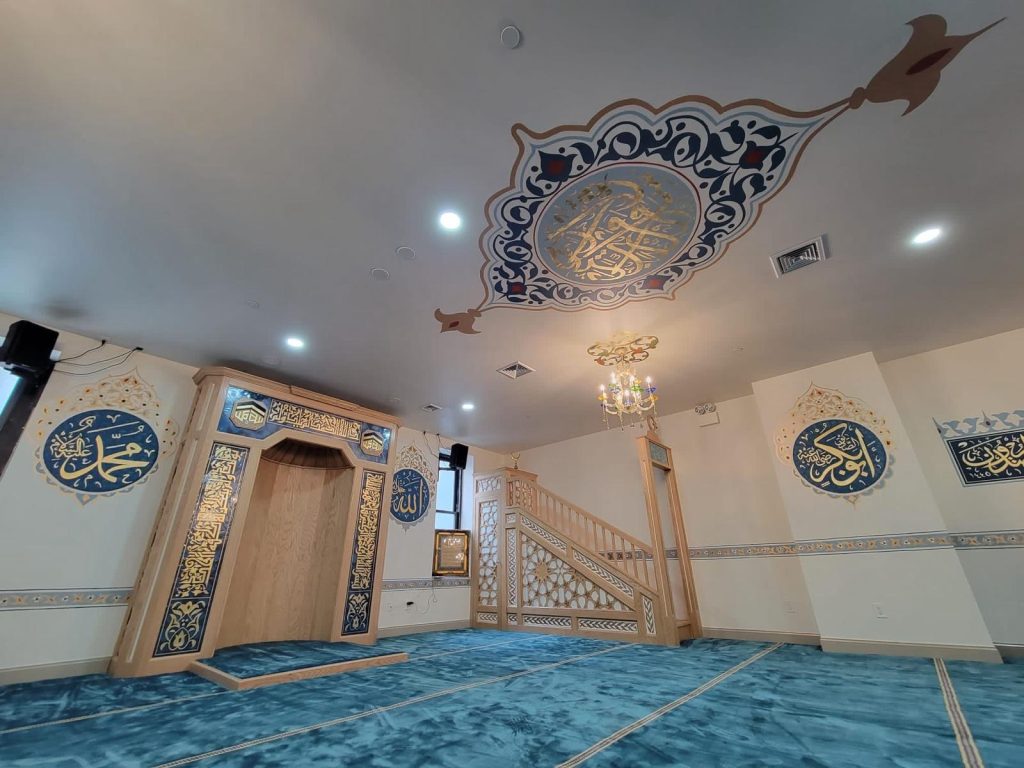
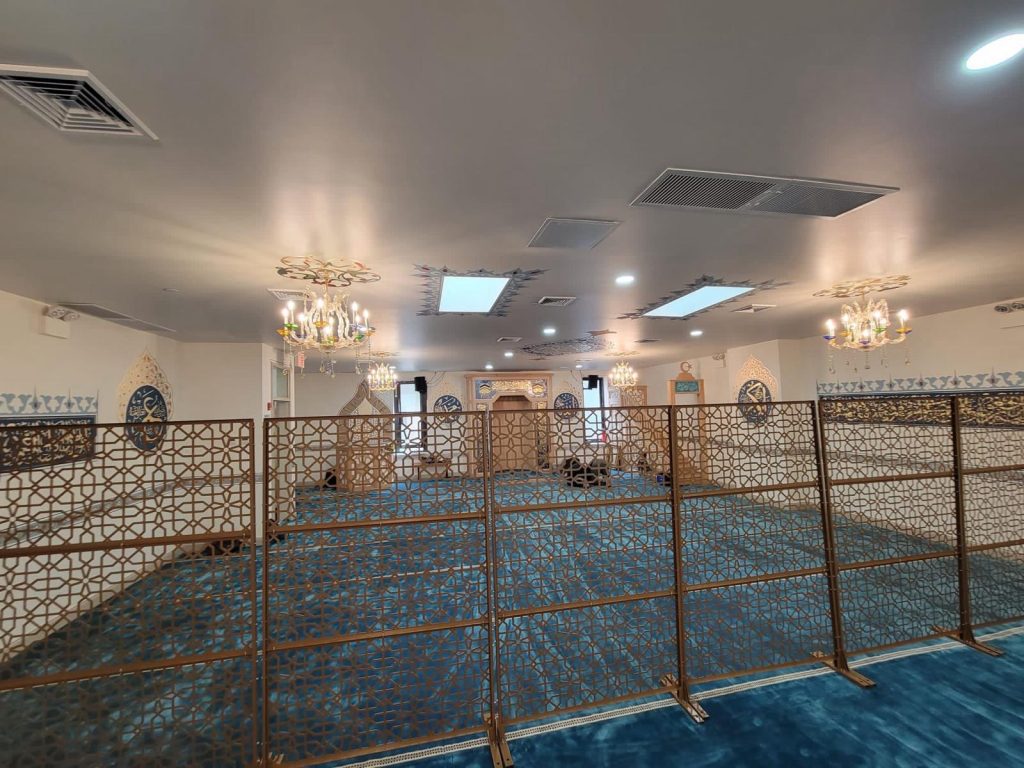
This building, which also houses a mosque, has served its members and all Muslims, becoming a symbol of the community's spiritual revival and commitment to its roots. The calls to prayer echoing here have become one of the most striking manifestations of the community's resolve to maintain its identity, even while far from its homeland.
However, despite efforts to maintain this historic building for many years, it became increasingly difficult to pass official inspections and its use became dangerous. Considering this, the association's management decided to completely renovate the building, taking on a significant responsibility. However, the funds raised from Ramadan, prayers, donations to the mosque, holiday balls, the Crimea Night, the Father's Day Çibörek picnic, and the Republic Day balls only covered one-third of the renovations.
Therefore, the association's President, Nariman Asanov, Vice President, Kemal Kurun, General Secretary, Dilek Mergin, Mümin Bige, and members of the Board of Directors have taken action with great dedication to make this sacred site safer and more useful, and have unhesitatingly signed up to the substantial amount required for renovations. With the help and support of the association's members and generous citizens, they continue to pay their debts and aim to clear the debt as soon as possible.
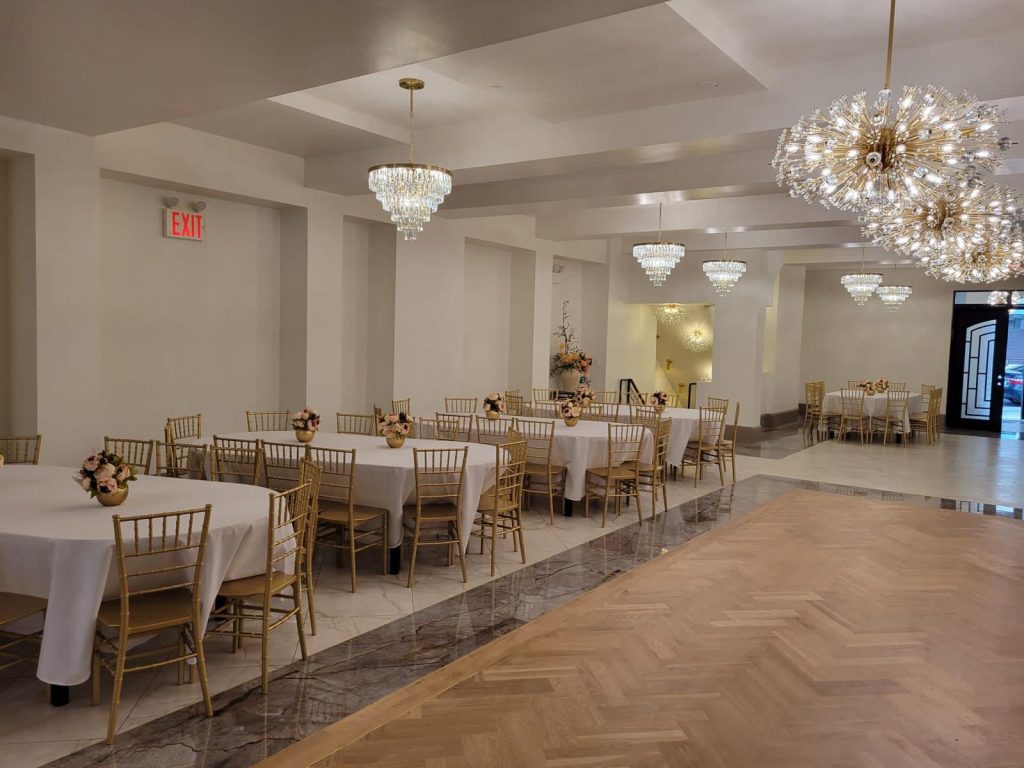
Additionally, the contributions of the Presidency for Turks Abroad (YTB) to the school affiliated with the association and the provision of an elevator by Murat Zincir Bey in memory of his late father have added significant value to this process. Thanks to this support, the community center has been revitalized, strengthened not only physically but also spiritually.
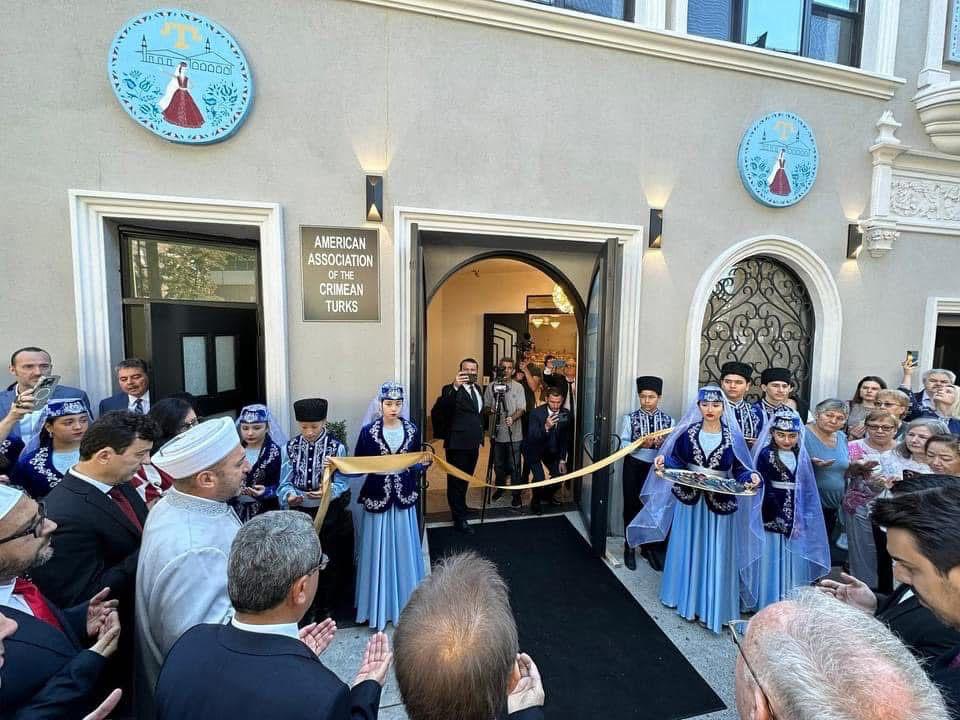
And finally, On September 17, 2023, A magnificent opening ceremony was held with the participation of esteemed statesmen, representatives of civil society organizations, and valued members of the community. This opening not only marked the reopening of a building, but also symbolized a solid step taken by the community toward the future, united and united.
Ali TOS
York Religious Services Attaché
(We would like to thank Mübeyyin Batu Altan and Dilek Mergin for numerical information and sources.)